Reading Kim Young-ha / 김영하
From 1990s ennui to a serial-killer's confessions, a tour of Korea’s most inventive noir mind

What if I told you that one of Korea’s most inventive writers started as a monk, got kicked out for talking too much, and then became a literary icon blending noir, crime, and existential dread? Today, we’re talking about Kim Young-ha, one of the most provocative and boundary-pushing voices in Korean literature.
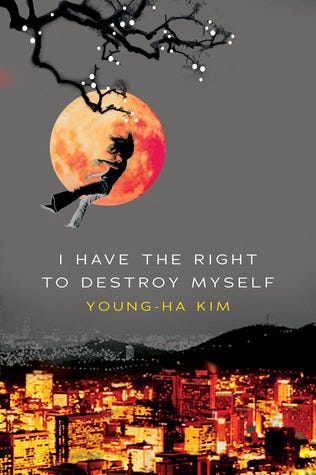
I Have the Right to Destroy Myself
Kim Young-ha exploded onto the Korean literary scene in 1996 with the publication of his debut novel, the provocatively titled ‘I Have the Right to Destroy Myself.’ A short story called ‘Paging’ published the previous year, had caught the attention of critics, but it was the ironic and, at times, nihilistic tone of his debut novel that really put him on the map and announced the arrival of a major new voice in Korean literature. The 26-year-old Kim had written a novel that dealt with death, sex, suicide, and the role of art in an increasingly consumerist Korean society. Kim has frequently said in interviews that the mid-90s were a time when suicide and what he terms ‘the meaninglessness of life’ were becoming trends and talking points in Korea. His debut sought to capture the ennui and alienation of this modern urban life in 1990s Seoul. Since its publication, critics at home and abroad have tended to see Kim’s work as embodying the often seismic cultural shifts Korean culture experienced in the 1990s and 2000s.
Kim Young-ha: Korea’s Literary Rebel You Should Be Reading / 김영하: 꼭 읽어야 할 한국의 문학 반항아
‘I Have the Right to Destroy Myself’s unnamed narrator wanders the streets of Seoul helping the lonely, the jaded, and the desperate to commit suicide. He designs the deaths of two women over the course of the novel and celebrates each by taking trips around Europe, where he indulges in sex and art in equal measure. After he helps the women commit suicide, he eulogizes them in short stories that try to make sense of the decision they made to die. One of the women, Judith, is romantically involved with two brothers who have dramatically different ways of surviving modern life in Seoul. The other woman is a performance artist with whom one of the brothers is briefly infatuated. The interlinking stories reveal the emptiness at the heart of modern life in an ultra-consumerist society. ‘I Have the Right to Destroy Myself’ was praised for its deranged creativity, joyful cynicism, and a general sense of perverse imagination.
‘I Have the Right to Destroy Myself’ by Kim Young-ha / Book Review / '나는 나를 파괴할 권리가 있다' / 김영하 / 책 리뷰
‘I Have the Right to Destroy Myself’ provides a nuanced portrayal of South Korea in the 1990s, capturing the social and cultural landscape of the time. Through its characters and narrative, the novel reflects the country's rapid modernization, economic growth, and the resulting dislocation many Koreans experienced. It explores themes of disillusionment, alienation, and the struggle to find identity in a changing society. Kim explores the consequences of South Korea's rapid modernization on its people. It highlights the disorientation and alienation experienced by individuals as traditional values clash with the emerging consumerist culture. The characters in the novel grapple with the loss of traditional structures, such as the family unit, and the erosion of meaningful connections in a fast-paced, materialistic society. ‘I Have the Right to Destroy Myself’ captured the zeitgeist of South Korea in the 1990s. It explores the consequences of rapid modernization, the struggle for identity, and the impact of external crises. Kim's insightful storytelling invites readers to reflect on their own place within the social changes of the time and the universal quest for meaning in an ever-evolving world.
PhotoShop Murder
One of Kim Young-ha’s following works, ‘PhotoShop Murder’ (1999), is a fast-paced, hardboiled crime story that showcases his playful engagement with classic detective fiction. Narrated by a cynical police detective in a major Korean city, the story is filled with sharp, ironic humor reminiscent of Raymond Chandler’s Philip Marlowe novels. The case begins with the murder of a photo shop owner, and as the detective investigates, we encounter a femme fatale, illicit affairs, and the kind of seedy urban atmosphere that crime fiction fans love. Unlike Kim’s later crime novels that subvert the genre’s conventions, PhotoShop Murder embraces them wholeheartedly, offering a tantalizing glimpse of what a great Korean detective series set in Seoul could be. The story was later adapted into the controversial 2004 film The Scarlet Letter.
Kim seems to be very self-consciously drawing on the tropes and conventions from the long history of crime fiction. It starts with a great line, 'Why do murders always seem to happen on Sundays?' The world-weary detective is annoyed because this murder has interrupted his day off. And then he goes on to say, 'I just hoped there was only one corpse. Two would double the paperwork.' The story is full of lines like that. This is a man who has become jaded by constant exposure to murder and violence, and crime in the big city. And then, he tells us that his marriage seems to be on the rocks after his wife had an affair. The murder victim's wife is an alluring young woman, possibly a femme fatale type of character. Every character seems to have a sordid secret. The story is set in motion when a man who owns a Photoshop is found murdered. Was it his beautiful young wife, her lover, someone else? Any crime fan will recognize these elements. And you can tell Kim loves the genre and is enjoying giving his own spin on these enjoyably familiar elements.
'Photo Shop Murder' by Kim Young-ha | Review & Analysis / '사진관 살인사건' / 김영하 / 책 리뷰
In recent years, there has been a trend for Korean crime novels with several high-profile titles such as 'The Good Son' by Jeong Yu-jeong, 'The Disaster Tourist' by Yun Ko-eun, and Kim's own 'Diary of a Murderer.' ‘PhotoShop Murder’ predates this current trend by well over a decade. Should we think of ‘PhotoShop Murder’ as a prelude or early forerunner of this trend, or is it more of an outlier? The current cycle of books are all doing more imaginative things than directly working in the detective genre. They draw on elements of crime fiction, but usually to do or say something or deconstruct something that we wouldn't necessarily see in traditional crime fiction. Kim is deliberately working within the established norms of detective fiction in this story. In his other crime-related books, he is confounding expectations or deconstructing conventions. All these works are great. But for this reader, there is something purely enjoyable and deeply satisfying about Kim's version of detective fiction. It always seems a little strange to me that there isn't a detective series set in Seoul. Almost every big American, British, and European city has at least one successful detective series. Edinburgh has Inspector Rebus, Dublin has the Dublin Murder Squad, Paris has Detective Adamsberg, and so on. Seoul seems ripe for such a series of crime novels. It seems strange to me that no one has attempted it. Or if they have, that they haven't been translated. And ‘PhotoShop Murder’ gives a tantalizing glimpse of what the great Korean detective series could be.
Kim Young’ha’s work certainly marked a departure from the types of narratives that dominated Korean fiction in previous decades. One of the traditional themes in Korean literature up to that point had been the importance of the hometown. It’s a theme that Kim was uniquely unable to connect to due to both an itinerant upbringing as the son of a military family and a bizarre childhood accident. Kim and his mother were poisoned by gas fumes from a coal briquette fire when they were living on a military base. As a result of the accident, Kim has no memories of his life before the age of 10. This, coupled with moving around the country depending on where his father was stationed, meant Kim essentially had no town to call home. He always had to adapt and survive in new environments and couldn’t write about a lot of the things that Korean writers had typically written about. This nomadic lifestyle as a child shaped his approach to writing, with Kim claiming that the overarching themes of his work are loneliness and adaptation; his novels are full of people adapting to new environments and dealing with some form of loneliness or social exclusion. These themes fit well with Korea, especially Seoul, in the 1990s, as the country continued to move from a rural society to an increasingly urbanized one.
Kim’s upbringing was both unusual in some aspects and highly standard in others. Due to his father’s occupation, he lived near the DMZ for a while and remembers being able to hear the propaganda broadcasts from the loudspeakers used by both the North and the South. He was raised Catholic and baptized Antonio. His aunts and uncles called him Antonio as a child, and for a time, he thought this was his real name. As a high school student, he wanted to become a Franciscan monk and even embarked on the training to become one. However, he was expelled from the monastery he was training at for being too talkative and kindly told that his was not the type of personality suited to life as a monk. His parents wanted him to have a stable career as an accountant, and desiring to be a good son, he enrolled at Yonsei University to study Business Administration. Despite being bored by the subject, he nevertheless graduated and went on to obtain a postgraduate qualification. During this time, however, he had started writing short fiction and seriously studying literature.
20-odd years later, Kim Young-ha is one of Korea’s most celebrated fiction writers with a body of work including several novels, 2 short story collections, and an award-winning screenplay. He has won many of the major Korean literary awards, been translated into at least a dozen languages, and seen several of his stories adapted into films. ‘Quiz Show’ was made into a musical, ‘Your Republic is Calling You’ was made into a play, and his side projects include a popular TED talk, a successful podcast, and a stint as a columnist at the New York Times. However, despite the acclaim, Kim has never truly reached a mainstream audience and arguably remains something of a cult figure to the wider reading public. None of his novels has cracked the top ten bestseller list in Korea, and most of the films adapted from his books have all flopped, leading some in the film industry to call it ‘the curse of Kim Young-ha’. (Although ‘Memoir of a Murderer’s film adaptation in 2017 bucked this trend). His short story collections sell more than his novels, and his most significant success in terms of sales was his translation of ‘The Great Gatsby.’ (See the interview at the end).
Your Republic is Calling You
Furthermore, Kim doesn’t yet seem to have crossed over with international audiences in the way that contemporaries like Han Kang and Shin Kyong Sook have. It’s difficult to understand why mainstream success has eluded Kim. His novels and short stories are very accessible, modern, and usually incorporate genre elements as well as provocative subject matter like sex, death, and crime. In his two other novels translated into English, ‘Black Flower’ and ‘Your Republic is Calling You,’ Kim explores different aspects of Korea. ‘Your Republic is Calling You,’ published in 2006 in Korea and translated into English by Chi-Young Kim and published in English in 2010, reads like a cross between James Joyce and John Le Carre, and was inspired by the North Korean propaganda broadcasts he heard as a child living next to the DMZ. The central character is a North Korean spy embedded in South Korea for decades, who one day receives the order to return home. Now a stereotypical middle-class South Korean salaryman with an indifferent wife and troubled teenage daughter, Ki-Yong spends a day traveling around Seoul, struggling to decide whether to stay in the South or return to the North. Kim says the novel reflects the idea that Koreans have an internalized psychological diaspora due to the divided nature of the country, the Korean War, and Japanese colonization. For English readers, it is a startling evocation of both modern Seoul and Korean identity politics.
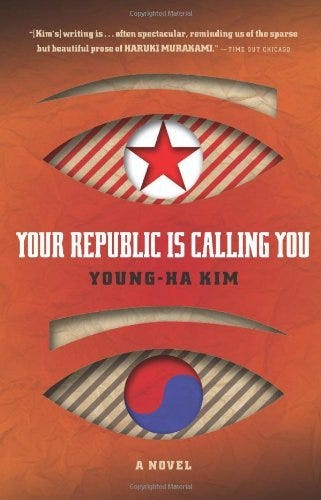
Kim tackles a multitude of themes here. This is a novel with a lot going on. Firstly, identity is a central theme. The protagonist, Ki-Yong, struggles to reconcile his true self with the identity he's lived for years. He’s been living as the person he’s been pretending to be for so long that he has forgotten who he really is. Should he follow his orders and betray his wife and daughter, or not follow his orders and betray his superiors in the North? The novel also explores the ever-present tension between North and South Korea, offering a somewhat unique perspective on the complex relationships between the two. There have, of course, been incidents involving spies between the North and South, and Kim draws on those real-life events for this story. Additionally, it also explores the theme of family and the sacrifices we sometimes make for the sake of a greater cause. Ki-Yong is a very well-developed character. His internal conflict and personal transformation are genuinely captivating. You'll find yourself empathizing with him and his moral dilemmas, as well as the frequently painful choices he has to make. But there are also two other main characters, Ki-yong’s wife and daughter, with their own stories, who provide depth to the narrative, and shed light on the impact of Ki-Yong's secret life on his loved ones. What the novel is really interested in is a comparison between North Korea and South Korea, and analyzing the different types of corruption, dissolution, and alienation the three characters experience depending on who they owe their allegiance to.
‘Your Republic Is Calling You’ by Kim Young-ha / Book Review / '빛의 제국' / 김영하 / 책 리뷰
This is definitely not your typical spy thriller. There are several reviews online where people complain that they were expecting a more traditional spy thriller. This is not that novel, so don’t pick it up expecting that. This is more of a modernist/postmodernist take on the genre, which sets out to subvert expectations. The espionage aspect really serves as a metaphor for hidden dualities. All of the characters in the book are living double or secret lives in some way. The novel explores life, change, and how these elements can catch us off guard. Ki-yong has grown comfortable in his South Korean facade, but now faces a life-altering decision, and his family doesn’t know who he really is. His wife has become bored with their dull, middle-class existence and is having an affair with a much younger man, facing her own moral choices. While their daughter, Hyon-mi, deals with what may seem like typical teenage struggles, but are important to her. All of these three stories, which occasionally intersect in unusual ways over the course of the day, highlight the profound impact of our choices, big and small. The story is more interested in exploring the nuances of life and the unforeseen consequences of our decisions than it is in depicting shootouts or chases, although those elements are present.
Black Flower
Kim’s third novel ‘Black Flower’ was seen by many as a radical departure. ‘Black Flower’ is an ambitious, sweeping historical epic based on true events. In 1905, over 1000 Koreans were duped into traveling to Mexico, where they were forced to work in the infamous Haciendas in brutal conditions. Adverts said things like, “Located near the United States of America, Mexico is a civilized and rich country. It has warm weather, clean water and fertile soil. The world knows it is a place where no diseases exist. In Mexico there are many wealthy people, but few poor people, so it is very difficult to find laborers. Like many Japanese and Chinese who went to Mexico and profited a lot last year, Chosun (Korean) people too will benefit much when go there …” These Koreans, however, were unable to return home because Korea was soon colonized by Japan, and they were swept up in the Mexican Revolution in 1910. For a brief historical moment, the displaced Koreans set up a tragically short-lived Korean nation in the jungles of Guatemala. It’s an incredible story that sheds light on a little-known part of Korean history. Kim stylishly weaves in a romance reminiscent of the film ‘Titanic’ and savage violence reminiscent of Cormac McCarthy’s Border Trilogy.
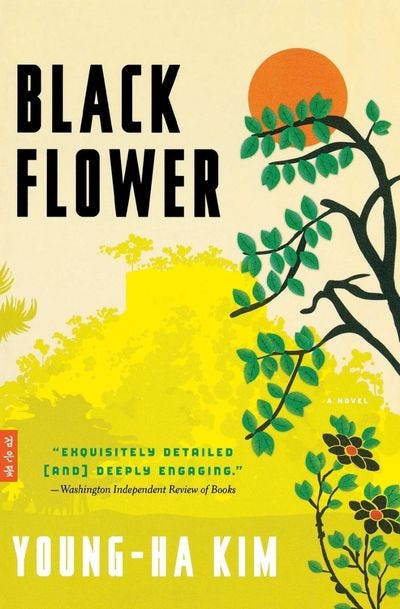
Although the historical event is real, the characters are fictional, and Kim builds a vivid ensemble to carry the tale. The story opens in Jemulpo, where Koreans queue to board a ship bound for Mexico, and unfolds through many voices, from tyrannical overseers to the lowest field workers, including thieves, former soldiers, a fallen priest, and displaced aristocrats. Orphan Ijeong dreams of earning enough to return home as a landowner, while Yi Yeonsu, a beautiful aristocrat’s daughter, longs for a measure of independence in the New World. They fall in love, but with no way to guarantee they’ll be sold to the same hacienda, their romance is shadowed by separation that threads through much of the book. Aboard the ship, the emigrants first taste the overcrowding, filth, disease, and social turmoil that will soon engulf them, setting the tone for a journey that will change every life it touches.
'Black Flower' by Kim Young-ha | Review & Analysis / '검은 꽃' / 김영하 / 책 리뷰
On arrival in Mexico, the Koreans are sold off to separate haciendas, and the reality is nothing like what was promised. Overwhelmed by the landscape, they confront a disorienting vastness: “The vastness of the plain was felt strongly by the Koreans, who had never in their lives seen the horizon on land. They realized they had been born between the mountains, had grown up looking at the mountains, and went to sleep when the sun fell behind the mountains. This endless plain, with no Arirang Hill of their folk songs, was a truly strange sight, and they tossed and turned not so much because the ground was hard but because of the boundlessness and emptiness around them.” In the new order, one or two betray their comrades for money, while social, religious, and sexual frictions are constant. Life at the subsistence level, especially at first, grinds everyone down. Some rebel and slowly work their way out of debt; others are drawn into the Mexican Revolution; and a contingent flees with Ijeong to Guatemala, where they briefly found a “New Korea” before history shifts again.
Charles La Shure Interview | Translator of Kim Young-ha’s “Black Flower” / 김영하 '검은 꽃' 번역가 / 인터뷰
Kim threads a set of urgent themes through the narrative, foremost the erosion of the rigid social hierarchies that the emigrants carried from home. Yeonsu’s father, Yi Jongdo, distantly related to the Emperor, cannot bring himself to labor, preferring to sit and reread Confucius, but he is the exception; most quickly grasp the new reality. As Ijeong puts it, “Do you really think the distinction between high and low, old and young, and man and woman will be as severe as it is in Korea? Look at this ship we are on. Aristocrat or commoner, all must line up to eat.” The Korea they knew effectively dissolves behind them, and in the New World, they must forge new lives and identities, an imperative made starker when, soon after their departure, their old country ceases to exist in any recognizable form. In his author’s note, Kim explains the title’s bleak beauty: “There is no such thing as a black flower; it exists only in imagination. In the same way the place that the characters in the novel hoped to go is a utopia that does not exist in reality.”
At its best, ‘Black Flower’ is irresistible: a fascinating story powered by great characters and set against epic, sweeping events. It twines a tender, precarious love story with revolution and violent conflict, springing plenty of surprises along the way. Above all, Kim’s beautiful, elegant yet sometimes raw prose carries the reader through every turn, giving the book both emotional depth and narrative momentum.
I Hear Your Voice
Kim’s ‘I Hear Your Voice’ is a high-energy, darkly imaginative novel that explores the underbelly of Seoul, following two childhood friends, Jae and Donggyu, as they navigate a world of crime, abandonment, and survival. Jae, a charismatic, almost messianic figure, leads a biker gang of disaffected youth drawn to his supernatural ability to empathize with suffering, while Donggyu struggles with his own anxieties and a fractured past. The novel is filled with gritty realism, action-packed storytelling, and deep existential themes, offering a raw depiction of runaways, corruption, and social neglect in South Korea’s capital. Influenced by Christopher Nolan films, Japanese manga, and revolutionary figures like Che Guevara and Malcolm X, I Hear Your Voice is both a literary adrenaline rush and a profound meditation on identity and redemption.
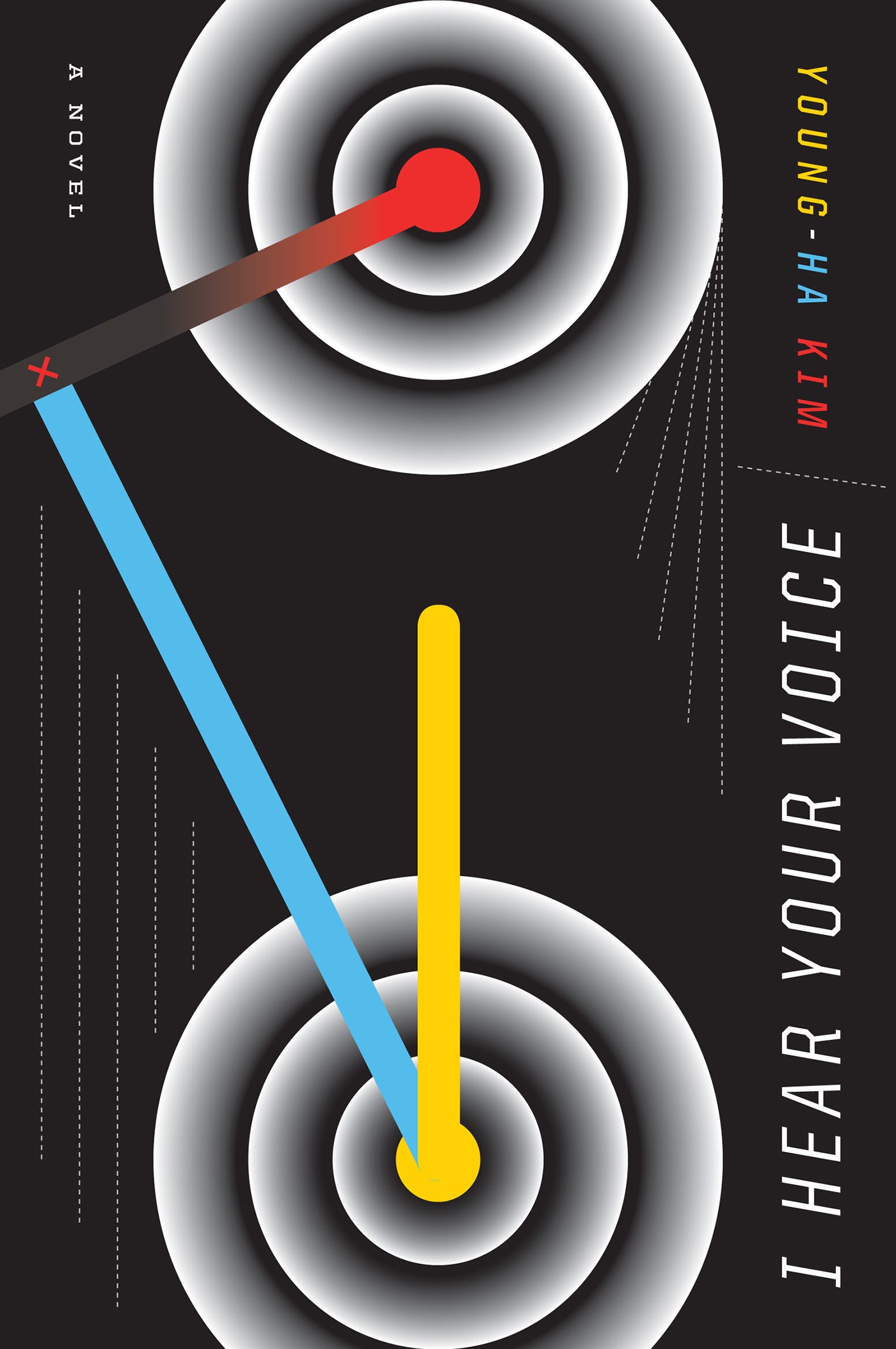
‘I Hear Your Voice’ follows a teenage “messiah” riding a 150cc motorcycle through Seoul’s underbelly, a world of homeless kids, schoolgirl prostitutes, violent cops, runaways, drug addicts, and biker gangs. Some readers will find the subject matter difficult to stomach; child abuse, rape, assault, and murder appear in often unflinching detail, but the novel also reveals Kim at the peak of his powers, displaying his virtuosic imagination and storytelling. The narrative centers on Jae and Donggyu, two disaffected teen delinquents and childhood best friends bound by an almost telepathic connection, and traces their relationship over two decades. It opens with an unnamed teenager giving bloody, painful birth to Jae in a bathroom stall at Seoul’s Express Bus Terminal; just as she is about to suffocate the newborn, Mama Pig, a cook at a local brothel, rescues him. Mama Pig raises Jae as her own and moves him into an apartment owned by a police detective, where he meets Donggyu, setting in motion a long, combustible story of loyalty, violence, and survival.
'I Hear Your Voice' by Kim Young-ha | Review & Analysis / '너의 목소리가 들려' / 김영하 / 책 리뷰
Donggyu, too, carries his own burdens: he suffers from functional aphonia, an anxiety-related condition that leaves him mute for his early years. During this time, he and Jae form a preternaturally close bond, with Jae seemingly able to interpret Donggyu’s thoughts. Their paths split when redevelopment sweeps their neighborhood: Donggyu’s father relocates him to a new school and a middle-class home, while Jae remains behind with Mama Pig, now drug-addicted and increasingly abusive, in the soon-to-be-demolished district of their childhood. From this rupture, the novel widens into the story of a young, strangely empathic “messiah” who becomes a beacon for Seoul’s disaffected youth, those living rough on the streets or scraping by in low-wage jobs.

Kim’s Seoul is a crucible of recurring abuse and neglect, exploitative adults, and social systems that barely function, a cityscape populated by homeless, aimless, law-breaking kids scraping by on the margins. Angst, alienation, and vulnerability define their days, and into this vacuum steps Jae, a messiah-like figure with an almost supernatural empathy: “If a being experiences extreme suffering, I feel it, too,” he says. His radiating compassion draws other teens to him and into his biker gang, which in turn paints a target on their backs for a violent cop, culminating in a high-stakes showdown in Gwanghwamun and central Seoul. For all its darkness, the novel is unexpectedly exhilarating to read: Kim’s inventiveness, pop-culture fluency, and sheer narrative verve keep the pages flying even as he indicts a society that fails its most vulnerable.
Kim is a stylish, inventive writer whose books deliver a kind of literary adrenaline rush, and ‘I Hear Your Voice’ channels a striking mix of influences, Christopher Nolan movies, classic Japanese manga, and Hermann Hesse, alongside the lives of Jesus, Che Guevara, and Malcolm X, to shape an increasingly spiritual tale. Despite the grim realities it depicts, the novel is a starburst of imagination that twists and turns, refusing to be pinned down; it stays consistently surprising, ingeniously structured, and pure reading excitement. It’s a must-read for fans of Korean literature and for anyone curious about vivid, unflinching depictions of modern Seoul.
Diary of a Murderer
Kim’s fifth book in English translation, and his second collaboration with translator Krys Lee, who also rendered ‘I Hear Your Voice,’ arrives with a distinctly cinematic charge. The title story was adapted into the hit 2017 film ‘Memoir of a Murderer,’ starring Sol Kyung-gu and Kim Nam-gil, and like much of Kim’s work, it reads like a screenplay unspooling in the mind: a serial killer in old age, slowly succumbing to Alzheimer’s, racing his failing memory to solve (or commit) one last crime. Across the collection, Kim leans into his trademark extremes, death, betrayal, sex, mental illness, and various forms of violence, delivering taut, propulsive narratives that aren’t for the faint of heart but are impossible to look away from. The collection also includes ‘The Origin of Life,’ ‘Missing Child,’ and ‘The Writer,’ equally dark and suspenseful stories that explore themes of betrayal, violence, and existential despair. Together, these stories cement Kim Young-ha’s reputation as one of Korea’s most daring literary voices.
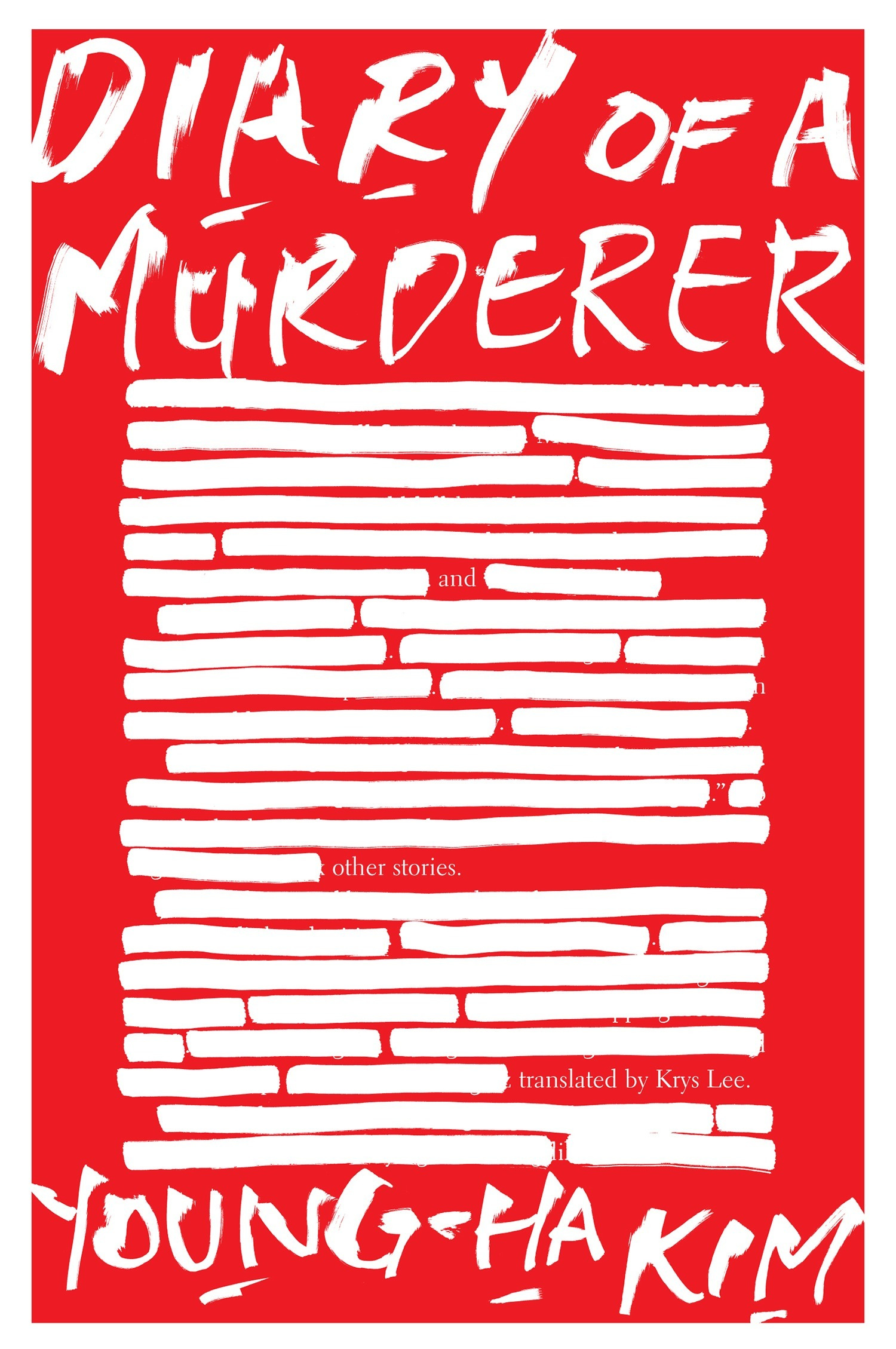
‘Diary of a Murderer’ is a gripping psychological thriller that puts a chilling spin on the serial killer genre. The story follows an aging former murderer suffering from Alzheimer’s, who struggles to determine whether he has resumed killing or if a new serial killer is targeting his adopted daughter. The novel plays with memory, identity, and unreliable narration, reminiscent of ‘Memento’ and ‘Memories of Murder,’ blending crime fiction with a tragic meditation on aging and morality.
'Diary of a Murderer' by Kim Young-ha / '살인자의기억법' / 김영하 / 책 리뷰 | Review & Analysis
The collection’s title story hooks you from the first line, Kim is a master of openings, “It’s been 25 years since I last murdered someone, or has it been twenty–six?” (a flourish that echoes an earlier Kim novel, ‘Photoshop Murder’ that begins, “Why do murders always seem to happen on Sundays?”). Preoccupied with death and crime, Kim brings to life an elderly narrator who confesses that, as a younger man, he was a serial killer, his spree began at sixteen with the murder of his father and continued through victims around his neighborhood. Now old and “retired,” he’s diagnosed with Alzheimer’s and, as his memory frays, confusion deepens. News reports of fresh local murders leave him terrified that he might be killing again and simply forgetting, until he realizes a younger serial killer is at work, one who has set his sights on the protagonist’s adopted daughter, the only person he has ever truly loved. What follows is a grim, propulsive cat-and-mouse: an aging murderer battling time, frailty, and his failing mind to stop a new predator before his daughter becomes the next victim.
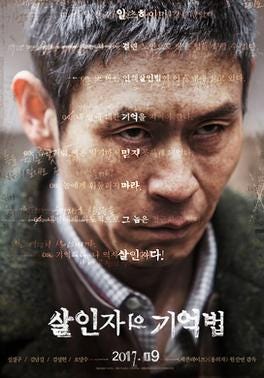
Kim layers ‘Diary of a Murderer’ with smart, cinematic echoes: it reads almost like a spiritual sequel to Bong Joon-ho’s ‘Memories of Murder’ (2003), told from the perspective of the uncaught killer now grown old and taking stock of his crimes. A near-retirement detective arrives with fresh-faced cadets to probe cold cases, an apparition who could be an older version of Song Kang-ho’s dogged cop, still unable to let go. The book also channels Christopher Nolan’s ‘Memento’: like Guy Pearce’s amnesiac, Kim’s protagonist cannot form reliable new memories, scrawling post-it notes to pursue his target and protect his adopted daughter, only to find the system fatally unreliable as his mind fragments. The fusion of these influences, K-thriller noir, puzzle-box memory play, and the intimate confession of a predator, makes for an exceptionally gripping, nerve-jangling read.
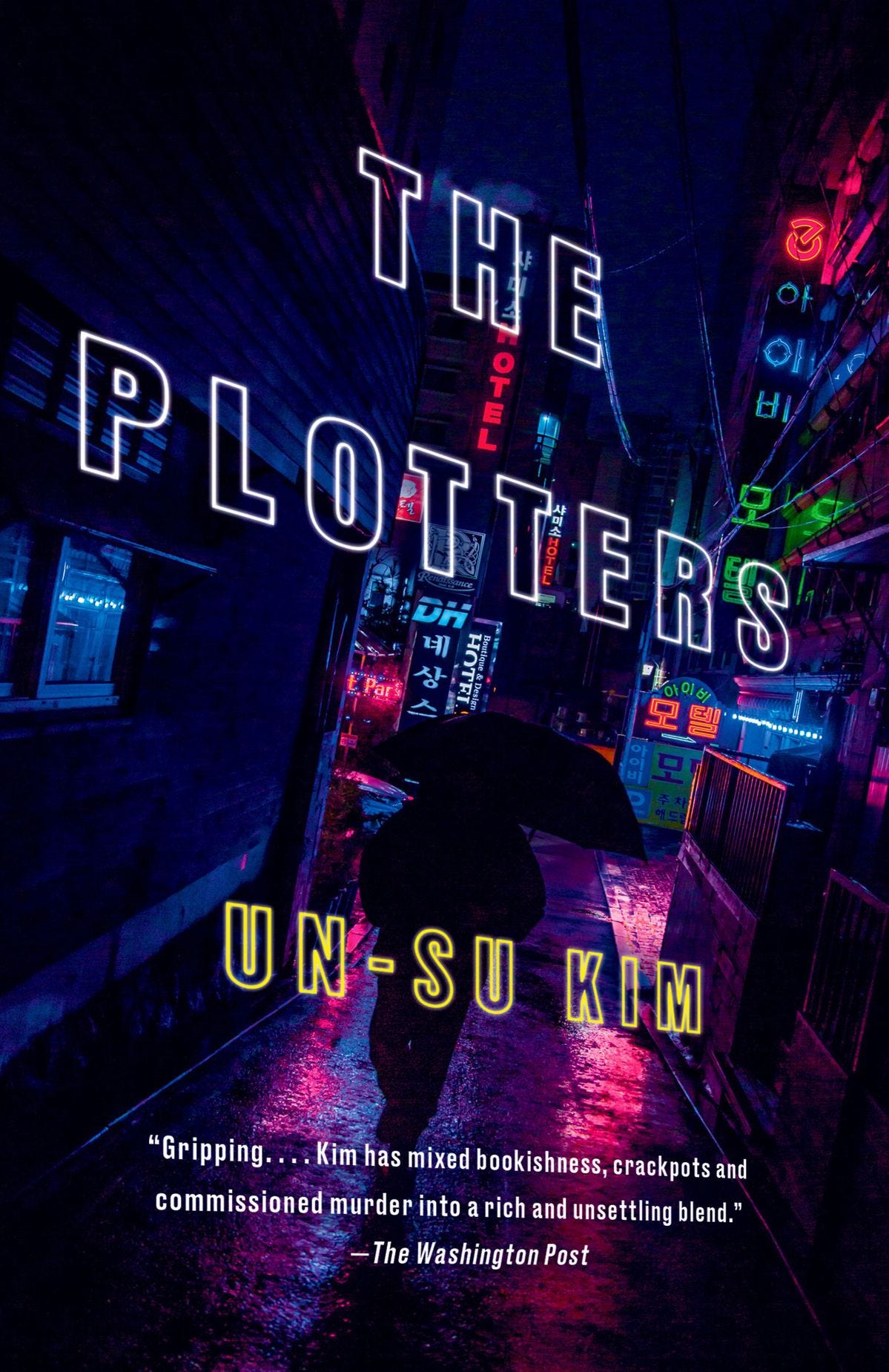
‘Diary of a Murderer’ feels like part of a wider trend in translated Korean fiction, but the fascination with murder isn’t unique to Korea so much as it is perennial: writers return to it because it’s among the most transgressive acts a person can commit, a prism for examining guilt, power, and social rot. Still, the recent Korean examples make for rich comparisons. Jeong You-jeong’s ‘The Good Son’ also uses an unreliable narrator with a possible mental disorder, but its killer is a young man at the start of his “career,” whereas ‘Diary of a Murderer’ follows a man at the end of his. Kim Un-su’s ‘The Plotters’ offers another angle, a professional assassin trying to step away from crime. Taken together, these books trace a spectrum: initiation, attempted exit, and terminal reckoning. That breadth, across psychology, ethics, and social critique, explains why the motif keeps resurfacing, and why it remains so compelling in contemporary South Korean fiction.
10 Korean Crime Novels Every Crime Fan Must Read | Thrilling Picks from Korea / 한국 범죄 소설 추천 TOP 10
The collection rounds out with three more stories, ‘The Origin of Life,’ ‘Missing Child,’ and ‘The Writer,’ each steeped in bleakness and moral ambiguity. Across these pieces, Kim populates the page with adulterous lovers, kidnapped children, abandoned babies, friends who betray each other, and eruptions of violence and murder. Read together, they trace a continuum of harm and complicity that feels less like sensationalism than diagnosis, culminating in a bracingly cynical view of human nature and the fragile social bonds we pretend will save us.
Kim Young-ha’s five novels and numerous short stories available in English translation provide international readers with a unique window through which to view Korean culture. It is interesting to note, however, that in recent years, Kim has stepped back from his reputation as Korea’s most transnational or international writer. Living in New York for two years made him realize that he is, at heart, a Korean novelist. He has also grown somewhat ambivalent about translations of his work, saying that they are like old ex-girlfriends who turn up on his door holding a baby. He says it’s nice to see them, but he can never be sure the baby is his.
Reading these novels, one can understand why Kim is praised for his vast range, the ingenuity of his imagination, and the sheer variety of voices he has breathed into life. Kim has a magpie-like tendency to draw inspiration from anywhere and everywhere, and taken together his novels and short stories form a mosaic of contemporary Korean society with love, sex, death, shopping, music, career, relationships, friendship, movies, technology, and art all recurring themes.
Kim Young-ha is in many ways unique amongst the current generation of Korean writers. In seeking to embrace and describe Koreans' experiences in an increasingly globalised world, he has taken a path few others, if any, have travelled. He published his first novel, the thrillingly postmodern "I Have the Right to Destroy Myself", in 1996. Since then, several of his works, including "Your Republic is Calling you" about a North Korean spy, have been translated into English, French, and German. A restlessly inventive writer whose work often blends a variety of narrative styles, he has won numerous awards and seen many of his stories adapted for stage and screen. His translation of "The Great Gatsby" recently topped the Korean bestseller list. On May 25th, he joined the Seoul Book Club hosted by Barry Welsh to answer questions about his life and work. The guest moderator for the event was Krys Lee, award-winning author of "Drifting House."
Kim Young-ha at Seoul Book Club: Part 1 / 김영하 | 서울북클럽 1부
Krys Lee: How did you come to be a writer? I'm especially curious after your TED talk called "Be an artist, right now!"
Kim Young-ha: When I was young, I lived near the DMZ area. My father was an army officer, and my parents wanted me to be a businessman or accountant who could earn a good income and have a stable job. So I entered Yonsei University, and my major was business administration. I wanted to be a good son to my parents, but that was my last good act for my parents. I didn't study at all. Business administration was really boring. I needed an exit, an escape. So I wrote some short fiction on the net and found an audience. They told me they liked my stories, so they encouraged me to write something longer. I began to write, study, and read a variety of good fiction. That is my beginning.
Kim Young-ha at Seoul Book Club: Part 2 / 김영하 | 서울북클럽 2부
KL: "Black Flower" strikes me as a radical departure from anything you have written before in terms of pacing, characters, etc. How did you come to this idea, and what does this novel mean to you personally?
KYH: "Black Flower" is my third novel, and before this novel, I didn't write historical fiction so back then, my audience didn't really expect me to write historical fiction. There was a friend of mine, a film director, and he moved to Seoul from Los Angeles, and on the flight, he met a scholar in the seat next to him. The scholar told him a very interesting, intriguing story. He was studying the Koreans' Emigration history. He told my friend that in 1905, 1000 or more Korean people moved to Mexico, and they worked at the haciendas, the plantations. They were not able to return to Korea because Korea was occupied by Japan, and the nation had disappeared. Then, in 1910, the Mexican Revolution began. So in the chaos, some of them moved to Northern Guatemala. They built a small nation in the jungle – a new Korea. It's a very fantastic story. He didn't buy that story because it sounded too fantastic, too great. But I did some research in the library and found some books that suggested the story could be true. So I flew to Mexico and Guatemala, and I began to write the first chapter of "Black Flower" in Antigua and Guatemala.
KL: I want to ask you about this itinerant lifestyle. We had a meal together in New York, and you said, "You are now a professional writer. You will be lonely." I thought "oh god! What does this mean? What does this entail?" What is that life like for you? You have spent so much of your time overseas. When you are here, you are on the move all the time. How has that changed your work and your life? I can see loneliness and solitude in your work.
KYH: I remember Krys's face when I told her this. I wanted to cheer her up. I believe being a writer means you will become a lonely person. I live in Busan now – there are no friends in Busan. Nobody makes a phone call to me. But I accept this.
KL: Not only accept – in some ways, you have created it by voluntarily moving to Busan.
KYH: Yes, I hate people. The job of a writer is to make a world – his or her own world. I believe the writer should live with their characters in their world. Sometimes I have trouble living with real people and hanging out with them, so I tell them – I charge myself like a kind of battery; a social battery. However, it doesn't last two or three hours. Then I have to go back to my world, my characters, my novels. So here and now, you see my social mask. The real Kim Young-ha is working at his desk. This is my avatar. It looks friendly and smiley, but it is not me.
KL: Actually speaking of characters, when you say avatar or mask, the first story I read of yours was "너의의미" ("I'm important"). I was intrigued because the main character is a playboy film director, quite a comical character. The main character in "I Have the Right to Destroy Myself" is, in some ways, suspect as well. There is a great tonal range in personalities and characters' backgrounds in the last ten years of your work. It's astonishing in terms of range. I'm wondering if, for you as a writer, there is something tying all these characters together? Are you more interested, or do you become more obsessed with some characters and want to live with them longer than others?
KYH: I believe everyone is special. Everyone is weird. Everyone has some weird aspect in their mind. So I just watch them. From 2001 to 2004, I worked in the film industry. I worked on film scripts. I don't know. What can I say? People say, "In your novels, in your short stories, there are many characters, many spectrums of characters." I don't know how I pick them, the characters, they just come to me. But I really like to watch people and talk to them, so let me tell a story. Ten years ago, my desktop computer was broken. So a computer guy visited my house. He and I were talking about his life, his wife, and problems, so much so that he didn't want to go back to his office. So he told his boss a lie. He said my desktop computer was totally broken, so I need more time. So he and I were talking about everything – his life, and how he became a repairman, and how much he loved his job. I have had many experiences like that. When I meet a fisherman or a repairman, or a cable guy, I like talking to them. I think I have a few good talents as a writer, but one of them that I like is making people talk to me for a very long time.
KL: I wonder how many people have lost their jobs as a result. Your short story "The Man Who Sold His Shadow" has been translated around the world. It's probably one of the loneliest stories I have ever read in my life.
KYH: Thank you
KL: I've read it several times, and each time it quietly, slowly breaks my heart. I'm interested in both the story's origins and the patterns of images in the story – it starts with a bird, a man, and a woman hiding in the bushes, a man on fire. How important are images in shaping your work? I'm translating your latest novel, and I see that there is a preoccupation with the image.
KYH: That story is my favourite short story, and the story started from images. You know that album by Pink Floyd, "Wish You Were Here"? When I wrote this story, I saw the album sleeve. The album is my wife's favourite album. She really loves Pink Floyd. So the story started from that image. Let me tell you the background of my childhood – I had a Catholic background. When I was born, my mother and father baptised me. So I have a Catholic name; my name is Young-ha Anthony Kim. My aunts and uncles, when I was a baby, all called me Anthony. I thought that was my name. My family has a very strong Catholic background. When I was a high school student, I wanted to be a monk – a Franciscan monk. In the summer vacation, I would visit a monastery and stay there 7 or 10 days with my friends. Some of my friends became monks and priests, but I was expelled by a monk for being too talkative. One day, a monk called me, brought me to his office. He told me you are not the kind of person who can stay in the monastery for your life.
KL: I hope someday you go back to that father and say, "I became a writer because of you."
KYH: I really like their clothes. They are very comfortable, but I don't want to go to the monastery; it's too boring.
KL: There is a saying that writers are essentially either short story writers or novelists. Tobias Wolfe was essentially a short story writer even though he won prizes for his memoirs and novels. Do you consider yourself more of a storywriter or a novelist? What form attracts you most?
KYH: Actually, I don't agree with that. I don't know much about the American tradition, but in Korea, many writers do write short stories and novels.
KL: I think it means what do you consider your greatest strength at heart? What is most important to you?
KYH: Actually, my audience, the Korean audience, prefer my short stories, and my short story collections sell more than the novels. It's not common even in Korea. But in my heart, I want to be a novelist, not a short story writer. I think writing short stories is like a hobby to me. Sometimes I work on my short stories for just one day or two days. I write very fast when I write short stories. I write really fast and revise many, many times. The first draft I write really fast. But when I write novels, it's totally different. I think about many things; the characters and words and I do research. But when I write short stories, I don't do research, I just write fast.
KL: When I think of myself, I feel like much more of a natural novelist, but I wish I were a real storyteller sometimes. I think there's some kind of natural orientation where we always want to be what we are not. Let's talk about your translation work. Four years ago, you translated "The Great Gatsby" into Korean, and it's at number two on the best seller list. The act of translation – especially from Korean to English or English to Korean transforms a work so much because you are reversing the order of the sentences; essentially reconstructing a voice and a tone and a character. How did you approach the translation?
KYH: In 2003, I heard two high school boys talking in a bookstore about "The Great Gatsby", the translated version. They were saying "holy shit! This novel is so boring." I was shocked, so I checked the translated versions, the Korean versions. I found the translations were not good enough for high school students to enjoy. I didn't think "The Great Gatsby" was boring – it's a romance story. That's why I began to translate "The Great Gatsby." In the Korean versions, Nick and Daisy speak in formal Korean even though they are cousins. That kind of talking was weird, so I tried to make a younger version of "The Great Gatsby." I finished it in 2009, and luckily Baz Luhrmann made a film adaptation. So now my "The Great Gatsby" translation is on the best seller list, where I have never landed. I haven't entered the top ten best seller list in Korea with my own novels, but my translation of The Great Gatsby is number two, so how lucky I am.
KL: Do you feel that things get lost in your own work? When you look at the translations of your own work, in what ways do you think your work has been altered in the translation? What are you less satisfied with, or how do you think your work suffers in translation? What gets lost in translation?
KYH: Actually, I don't read my translations. People won't believe my word. I write in Korean and revise it again and again, so many times. So I don't want to read my novel in English or French. But when I was in New York City, sometimes I would have to read my novel in English (at an event), so I would have to practice reading my novel in another language. I just believe my editor and translator; that's all I can do. I try to choose and meet a good editor, translator, and literary agent.